
Strategic Land Reclamation and Coastal Stabilization in Ghana
The Problem: Severe Coastal Erosion and Humanitarian Risk
The Keta Lagoon region in Ghana faced a dual threat from the Atlantic Ocean and the seasonal swelling of the Volta River.
- Rapid Shoreline Retreat: The isthmus between Keta and Kedzi was eroding at an alarming rate of 4.0 to 8.0 meters per year, leaving the strip of land less than 50 meters wide in critical areas.
- Loss of Infrastructure: Significant portions of residential areas and the vital road linking Keta to northern territories had already been claimed by the sea.
- Economic Threat: A breach of the isthmus threatened to destroy the local fishing industry and agriculture by catastrophically altering the lagoon’s salinity and flow.
The Solution: The Ellicott® 18-inch Cutter Suction Dredge “Alabama”
The Ministry of Works and Housing of the Republic of Ghana partnered with Great Lakes Dredge & Dock (GLDD) to implement a turnkey design-build solution. Central to the operation was the Ellicott®-built 18-inch (457 mm) cutter suction dredge, the Alabama.
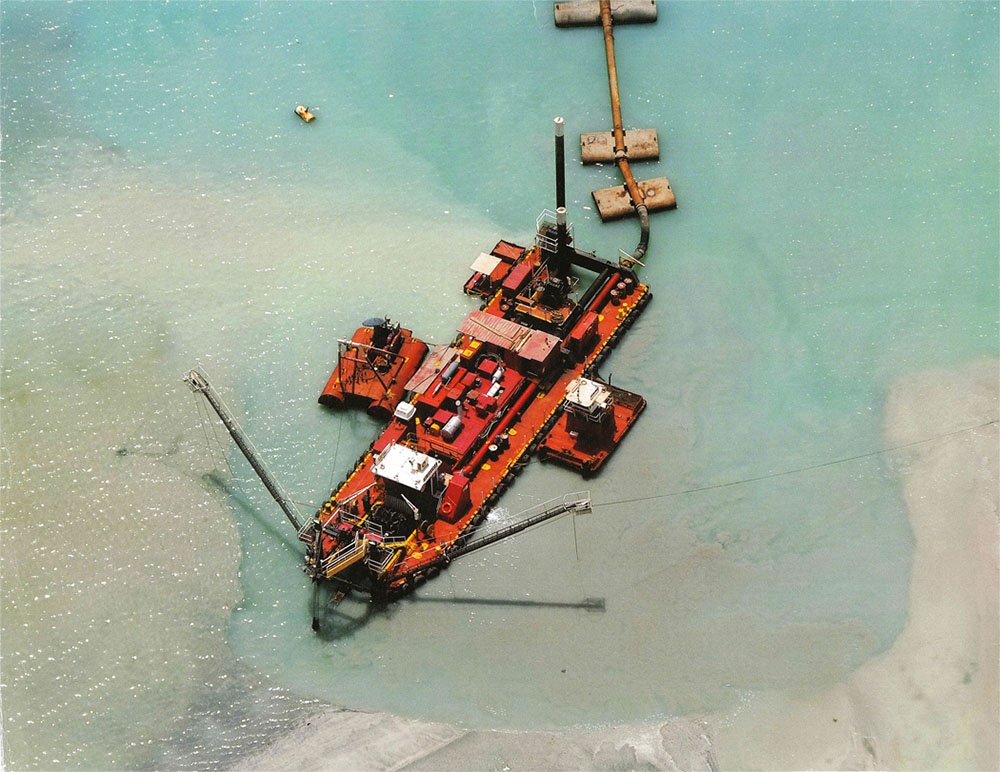
The Equipment: The Alabama was specifically utilized for its high-production capacity and reliability in heavy civil maritime work. To maximize efficiency, it was retrofitted with new Ellicott® anchor booms.
Operational Scope: The dredge commenced work by stripping soft, unsuitable material overlying future borrow sand. This material was discharged to create island bird habitats, fulfilling environmental sustainability goals.
Roadway Construction: Following the stripping phase, the Alabama was responsible for pumping fill to create a new 8.3-km road/causeway between Keta and Hlorve, re-establishing a vital transportation link.
Collaborative Fleet: The Ellicott® dredge worked in coordination with other heavy civil equipment and quarry kits to construct seven headland groynes and an offshore breakwater.
The Outcome: A Stabilized Coastline and Reclaimed Territory
The project successfully protected the environment while fostering socio-economic growth for the Avu-Keta subregion.
- Reclaimed Land for Communities: The dredging operations successfully reclaimed land from the lagoon, providing secure areas for businesses and homes to be rebuilt in Keta, Vodza, and Kedzi.
- Restored Transportation: The new 8.3-km road/causeway reopened traffic to neighboring Togo and other coastal Ghanaian cities, giving local farmers and businesses essential access to markets.
- Fisheries Protection: The sea defense works created protected areas where local fishers can safely launch canoes and sustain the shore-based drag-net fishing industry.
- Economic Impact: The project represented a significant U.S. commercial presence in West Africa, with over $75 million in U.S. goods and services utilized, financed through the U.S. Eximbank.