
Protecting Water Quality and Reservoir Capacity in Ohio
The Problem: Sediment Infilling and Water Quality Risks
Tappan Lake, a key reservoir managed by the Muskingum Watershed Conservancy District (MWCD) in Ohio, was facing a common but critical threat to its health.
- Silt Accumulation: Decades of upstream runoff had carried massive amounts of sediment into the lake’s shallower bays, particularly near the intake areas.
- Loss of Capacity: The build-up of silt was reducing the reservoir’s total water storage capacity, which is vital for both local water supply and flood control.
- Environmental Impact: Excessive sediment can trap nutrients that lead to harmful algal blooms and degrade the aquatic habitat for local fish populations.
- Navigational Hazards: In certain areas, the water had become so shallow that recreational boating—a major economic driver for the region—was becoming dangerous or impossible.
To restore the lake’s depth and health, the MWCD and its contractors deployed the industry-standard Ellicott® Series 370 Dragon® cutter suction dredge.
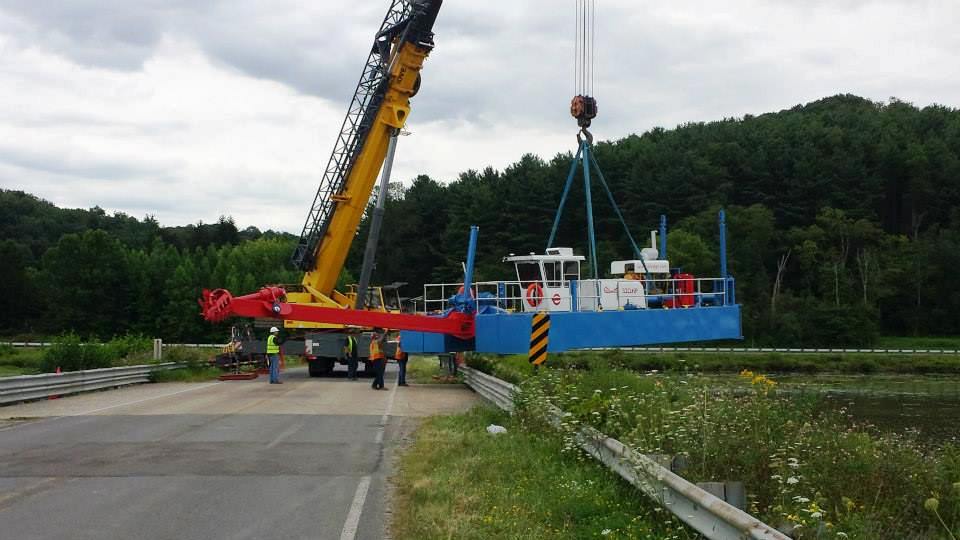
- The Equipment: The Series 370 is the most popular small-to-medium sized cutterhead dredge in the world, prized for its ability to operate in the shallower, confined waters of inland lakes.
- Precision Dredging: The 370’s cutterhead was used to break up the compacted silt on the lake floor, which was then pumped as a slurry through a series of floating pipelines.
- Efficient Transport: The dredge moved the material to a specially constructed Dredge Material Management Areas (DMMA) located away from the shoreline, ensuring that the sediment would not wash back into the lake during rain events.
- Strategic Reliability: Because the project involved working in a public recreational area, the 370’s relatively small footprint and efficient operation were essential for minimizing the impact on local tourism during the dredging season.
The Outcome: Renewed Vitality for the Watershed
The dredging of Tappan Lake represents a proactive investment in Ohio’s natural resources and infrastructure.
- 400,000 Cubic Yards Removed: The project successfully targeted the removal of nearly half a million cubic yards of sediment, significantly increasing the water depth in critical sections of the lake.
- Improved Water Quality: By removing the nutrient-rich silt, the MWCD took a major step toward reducing the risk of algal blooms and improving the overall clarity and health of the reservoir.
- Restored Recreation: Boat traffic was able to return to previously shoaled areas, securing the lake’s status as a premier destination for fishing and tourism.
- Long-Term Sustainability: The success at Tappan Lake has served as a blueprint for the MWCD’s ongoing efforts to maintain other reservoirs within the watershed, proving that a targeted Ellicott® dredging program is the most cost-effective way to manage inland water bodies.